January, 2026
Design Strategies for Singapore’s Landed Properties
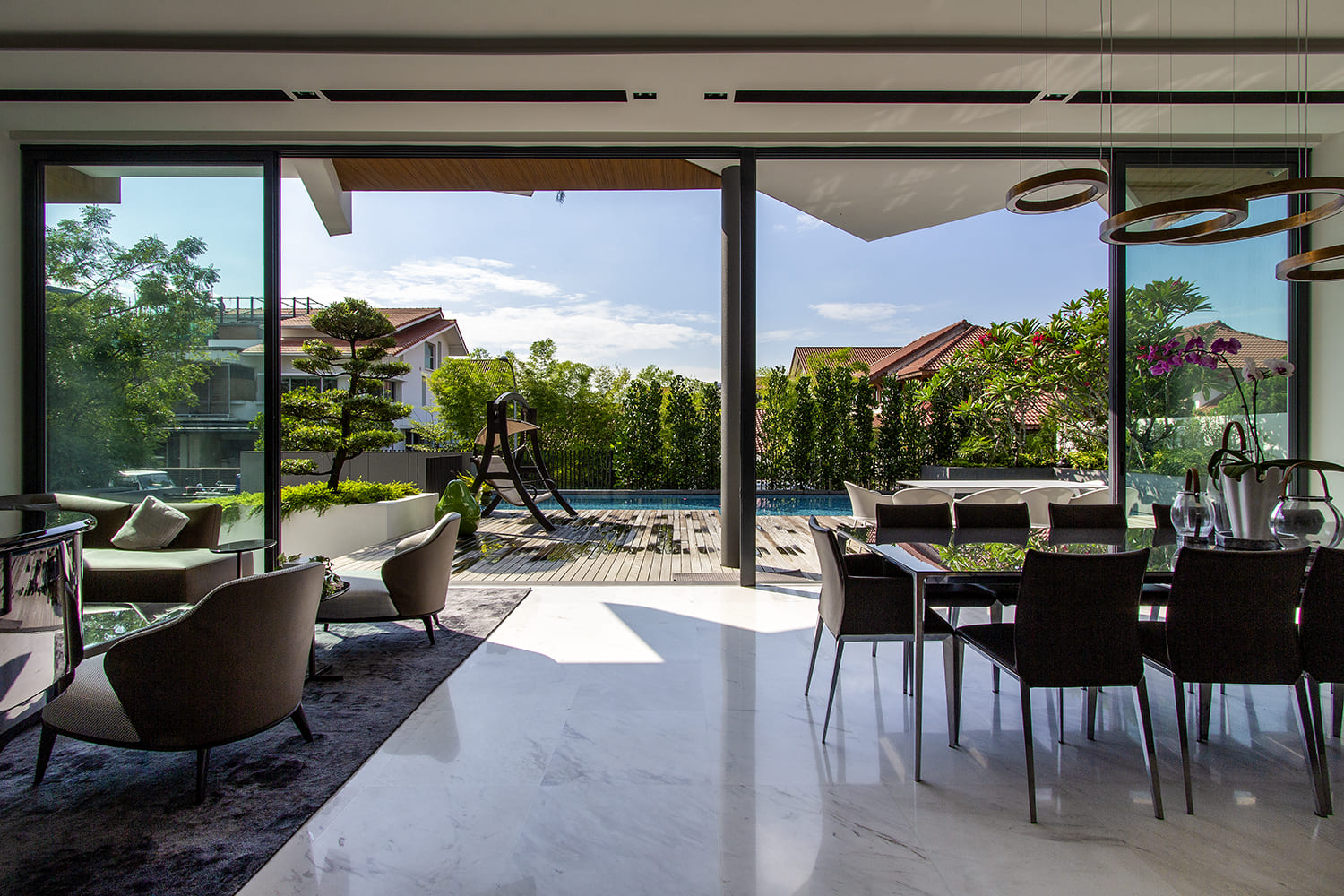
Image by: Amir Sultan
Singapore’s landed house design is evolving in response to the island’s climate, urban density, and sustainability needs. With limited land and growing environmental awareness, architects must creatively balance beauty, functionality, and climate responsiveness. This blog explores effective strategies that homeowners and developers can adopt when designing landed properties in Singapore from passive cooling to material selection all while maintaining modern comfort.
Tropical Modernism Principles Adapted for Singapore’s Climate and Urban Density
Tropical modernism is a design approach that embraces Singapore’s humid, rainy climate while addressing the challenges of urban density. It focuses on natural ventilation, shaded openness, and integration with greenery all aimed at enhancing comfort with minimal reliance on mechanical systems.
In the context of Singapore’s landed housing, cross-ventilation is a key strategy. Aligning windows and doors with prevailing winds allows interiors to stay cool naturally. Open-plan layouts and double-volume spaces support air circulation, making compact plots feel breezy and expansive. Shading devices like deep overhangs, vertical fins, and timber screens reduce heat gain while diffusing soft daylight, contributing to both energy efficiency and a warm, contemporary aesthetic.
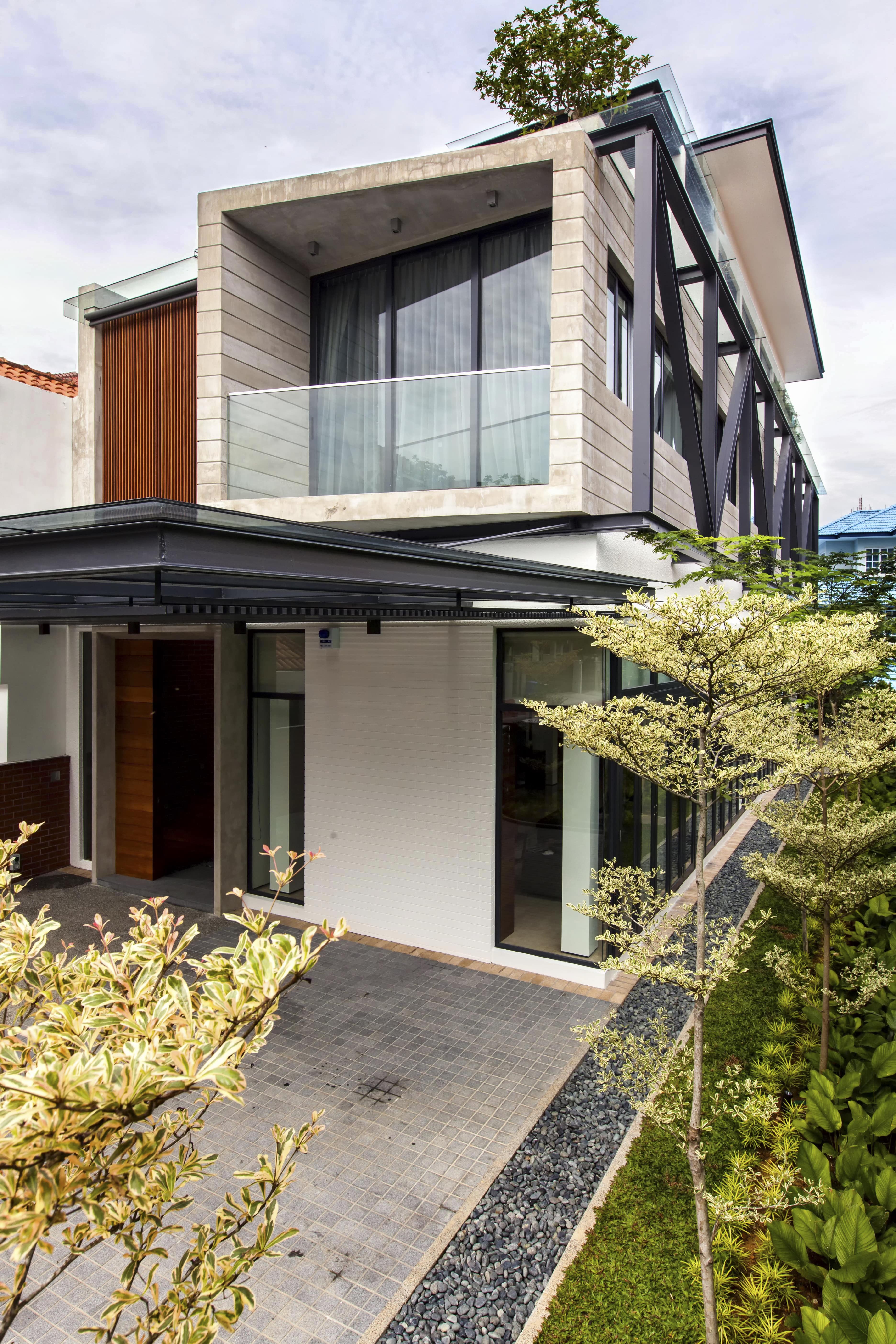
Image by: Sanjay Kewlani
A compelling example is The Railway House, a semi-detached home that rethinks its typology. Traditionally seen as two conjoined units, this design pulls the main building away from the party wall, creating a 3-meter-wide fissure that brings light and air deep into the home. This gap becomes both entry and social core, featuring a double-volume foyer lit from above, textured brick walls, and a naturally ventilated gathering space. Green pockets at either end, along with deep overhangs and operable blinds, strike a balance between openness and shelter.
Tropical modern homes in Singapore often blur indoor-outdoor boundaries through verandahs, courtyards, and green walls, fostering a closer relationship with nature. Thoughtful attention to privacy and sightlines in dense neighbourhoods via screening and planting ensures homes are both climate-responsive and context-sensitive, offering sustainable, people-centric living in the tropics.
Design Strategies that Optimise Natural Cooling and Lighting Year-Round
Maximising natural cooling and daylighting is essential for sustainable living in Singapore’s hot, humid climate. Passive design strategies not only improve comfort but also reduce long-term energy consumption and utility costs.
Orientation is a key consideration. Positioning the building with longer facades facing north-south limits direct sunlight on the east and west sides, reducing heat gain. Strategically placed openings and cross-ventilation channels through courtyards, air wells, or high-low window placements allow for effective airflow, keeping interiors naturally cool.
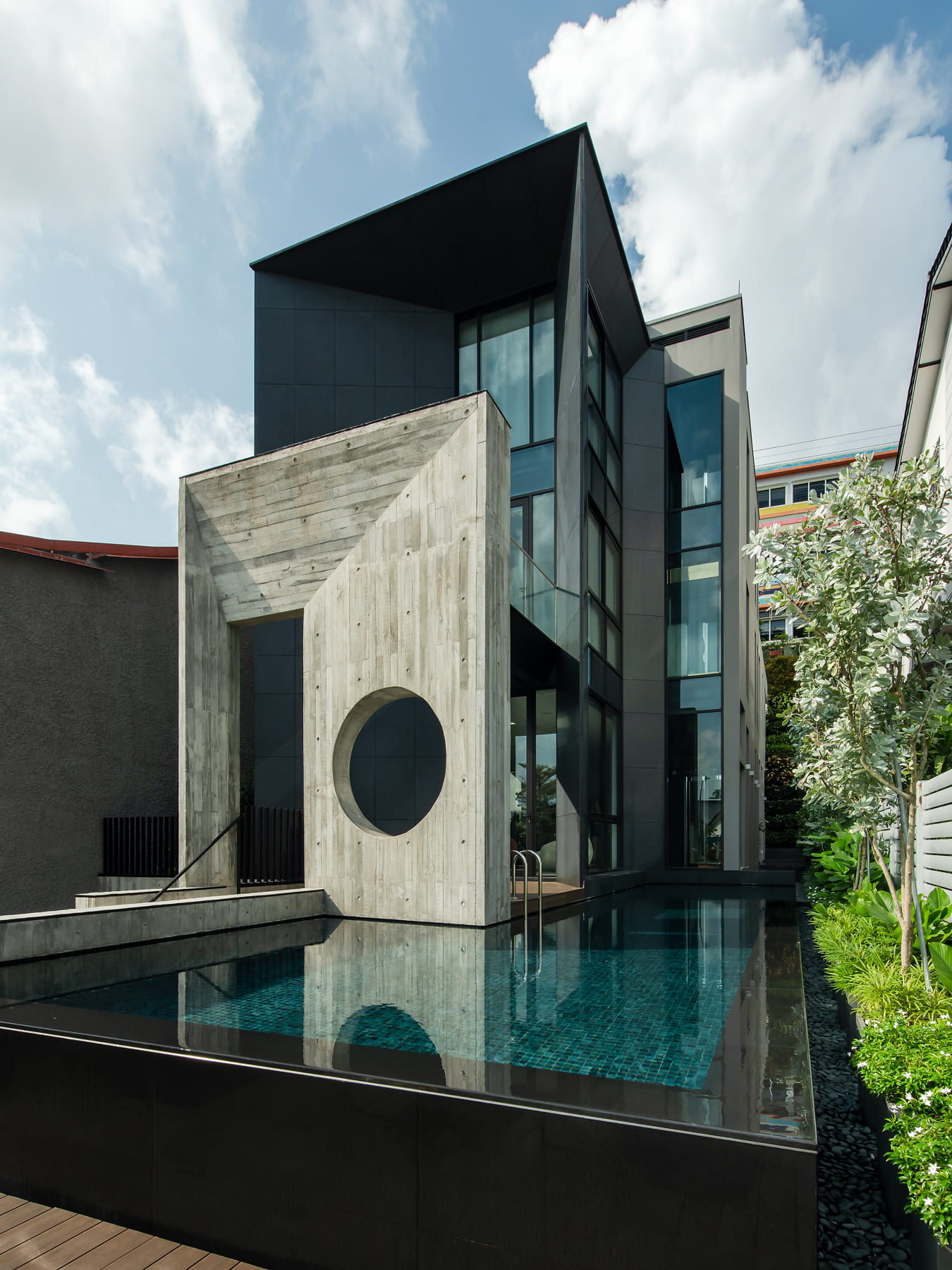
Image by: David Yeow
Natural ventilation is further enhanced by features like clerestory windows, louvres, and internal voids, which help warm air rise and escape while drawing in cooler air. Light shelves and skylights bring diffused daylight deep into the home, reducing reliance on artificial lighting, especially in transitional spaces like stairwells and corridors.
Landscaping also plays a vital supporting role. Trees, green roofs, and water features help lower surrounding temperatures and improve air quality, working in tandem with architectural elements to create a comfortable indoor environment.
An excellent example of these strategies in action is Coronation Road, redeveloped semi-detached home transformed into a detached 2 storey bungalow with a basement, pool, and car lift. The architecture, a bold blend of modern art and brutalism, features a sculptural front façade composed of off-form concrete, contrasting with dark granite cladding and an aluminium roof. Despite its bold aesthetic, the home integrates passive cooling principles, natural light, and layered materials to moderate temperature and light throughout the day.
Together, these strategies create year-round thermal comfort, reducing energy use while elevating the design and liveability of modern tropical homes.
Material Choices and Spatial Planning Tailored to Monsoon and Solar Conditions
In Singapore’s climate of intense sun and tropical downpours, selecting the right materials and planning spatial layouts are crucial for resilient home design. Concrete, natural stone, treated timber, and aluminium are durable choices that withstand rain and humidity, while also offering low maintenance and a timeless finish.
Solar-reflective surfaces and insulation help regulate internal temperatures. Treated facades, roofs, and even paints can reflect sunlight and reduce thermal load. Elevating the ground floor guards against flash floods, while deep eaves, recessed windows, and ventilated facades enhance weather protection and cooling. Bathrooms and utility areas placed on west-facing facades serve as thermal buffers for key living spaces.
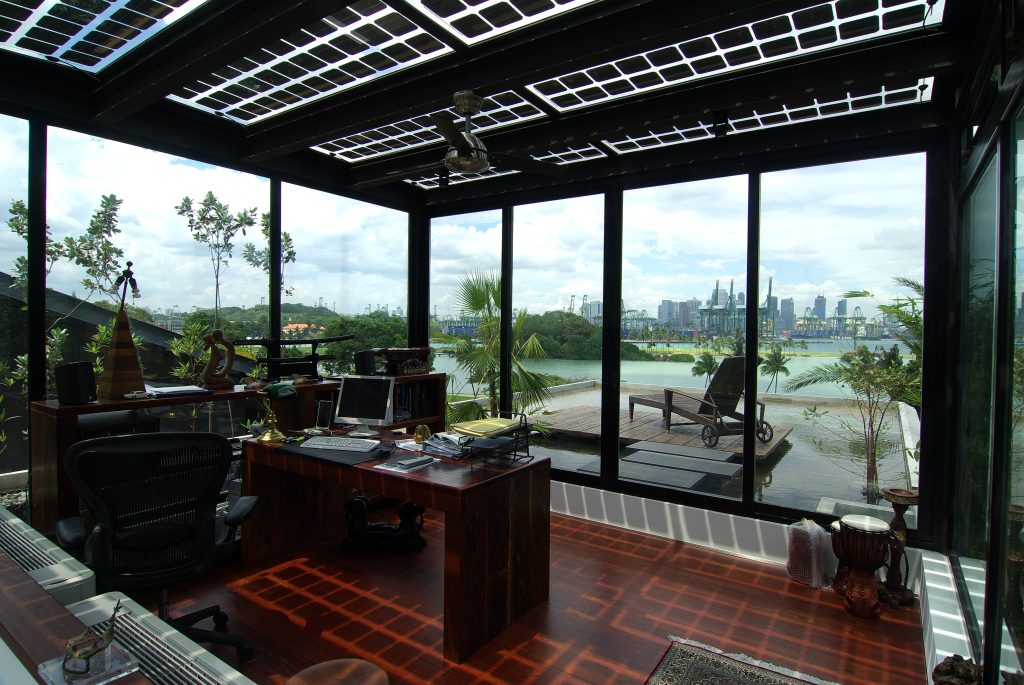
This design approach was beautifully realised in a Lakeshore View bungalow guided by feng shui principles of jor san, hiong hoi “sitting with the mountain at the back, facing the sea.” The house is split into two linked pavilions, capturing sea breezes and open views of a golf course and distant sea, while higher levels frame the hill behind. Lush landscaping around and within the structure improves shading, comfort, and insulation.
This project integrates eco-friendly innovations as well. Photovoltaic panels supply solar energy, rainwater is harvested for irrigation, and a pond is filtered using water plants. Recycled materials such as Australian hardwood railway sleepers were used alongside off-form concrete and terrazzo to reduce material consumption. These choices reflect a commitment to sustainability, where every material and spatial decision supports durability, efficiency, and environmental harmony crucial for long-term comfort in Singapore’s demanding climate.
Climate-Responsive Design for Energy Efficiency and Everyday Comfort
Designing with the climate in mind is crucial for energy-efficient, comfortable living in Singapore. A well-insulated envelope often overlooked in the tropics can drastically reduce cooling loads. Properly insulated roofs and walls, coupled with airtight construction, keep interiors cooler while lowering energy bills and emissions.
High-performance glazing, such as double-glazed or low-emissivity coated windows, filters heat and UV rays while providing natural light and acoustic comfort. When paired with thoughtful shading, they create a bright yet cool interior environment. Shading is further optimised by architectural form in our project of the Frankel Drive house, where bedroom ‘units’ pop out in different directions. Their placement aligns with the sun and views each overhang specifically shaped to provide ample shade and control solar exposure. Every unit includes a balcony and planter, enhancing thermal insulation while reinforcing a green, organic character.
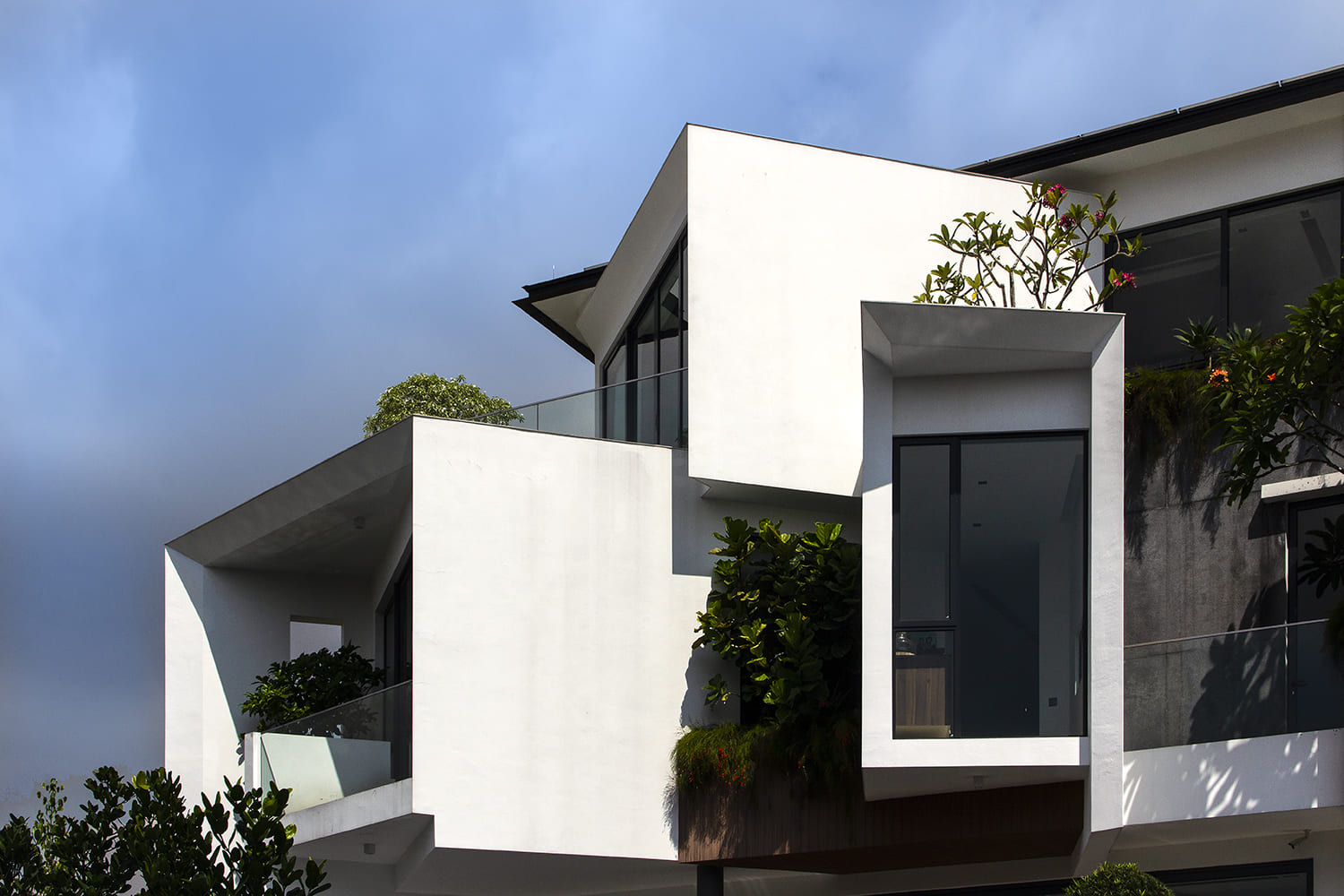
Image by: Amir Sultan
Smart systems like solar panels, heat recovery ventilation, and occupancy-based lighting management integrate seamlessly with the home’s architecture. These systems work together to optimise daily performance while reducing long-term environmental impact.
By combining passive strategies with modern technology and user-driven form-making, the house demonstrates how thoughtful climate-responsive design enhances sustainability and comfort without compromising beauty or individuality.
Singapore landed house design is about more than just aesthetic choices; it’s a holistic response to climate, culture, and urban context. From adopting tropical modernism to selecting materials that withstand monsoons, every design decision plays a role in crafting a sustainable and comfortable home. Embracing natural ventilation, daylighting, and energy-efficient materials allows landed homes to thrive in Singapore’s tropical environment while offering long-term value for homeowners.
Discover Aamer Architects
Aamer Architects specialises in climate-responsive and elegant landed house design in Singapore that merges lifestyle, functionality, and the environment. Reach out to us today to start designing your dream home with purpose and precision.
If you are inspired by our work and ready to bring your dream home to life, we’d love to hear from you. Contact us today and let us craft an extraordinary house together for you.